
How to Care for LED Clothing: The Complete Guide
These Are Real Garments with Real Electronics
I get this question more than almost any other: "How do I wash it?" The short answer is carefully. The longer answer is everything below.
LED clothing is not a novelty t-shirt from a mall kiosk. The pieces I build contain individually addressable LEDs, custom wiring, microcontrollers, and rechargeable batteries, all integrated into fashion-grade fabric. They are engineered to be worn, but they are still electronics sewn into textiles. That combination demands some intention around how you handle, clean, store, and transport them.
This guide covers everything I tell my customers after they place an order. If you own any LED garment — from us or anyone else — most of this applies.
Daily Wear and Handling
The most common damage I see comes from the simplest moments: putting the garment on and taking it off. LEDs and their wiring sit close to the fabric surface, and snagging them on jewelry, zippers, or belt buckles can pull connections loose.
A few ground rules:
- Remove rings, bracelets, and watches before putting on or taking off an LED garment. This is the single most effective thing you can do to extend its life.
- Step into dresses and jumpsuits from below rather than pulling them over your head when possible. This reduces friction against LED panels and wiring.
- Avoid crushing the electronics by sitting on hard surfaces for extended periods. LED panels are flexible, but sustained pressure against a chair back or car seat can stress solder joints.
- Turn the garment off when not actively displaying. This is not just about battery life — LEDs generate heat, and prolonged operation against skin without airflow can be uncomfortable.
For sequin-based pieces, the LEDs are mounted behind individual sequins. The sequins themselves are durable, but yanking or scraping them can detach the LED beneath.
Featured Product
Long LED Sequin Dress — Our sequin pieces use individually mounted LEDs behind each sequin. Handle the sequin surface gently and avoid scraping against rough textures. View Product →
Cleaning and Washing
Here is the rule, and there are no exceptions: never machine wash an LED garment. Not on gentle. Not in a garment bag. Not with cold water. The agitation and submersion will destroy the electronics.

What you should do instead:
- Spot clean for minor stains. Use a damp cloth with a tiny amount of mild detergent. Wring the cloth out thoroughly — you want it barely damp, not wet. Dab the stain, do not rub. Let it air dry completely before powering on.
- Hand wash fabric sections only if the garment genuinely needs a deeper clean. Disconnect or remove the battery pack first. Keep water away from the LED panels, controller, and any visible wiring. Wash only the fabric areas that are free of electronics.
- Never submerge the entire garment in water. Even if someone tells you their LEDs are "waterproof," the connections, controllers, and battery housings are almost certainly not.
- Air dry only. No dryer, no heat gun, no hair dryer. Lay flat on a clean towel and let it dry at room temperature. Make sure it is completely dry before reconnecting the battery.
If you spill something directly on an LED panel, power the garment off immediately. Blot (do not rub) with a dry cloth, then let it air dry for at least 24 hours before testing. Most of the time, this is fine. Liquid + active electricity is what causes real damage.
Storage
How you store an LED garment between uses has a direct impact on how long it lasts.
- Hang or lay flat. Do not fold LED panels. Folding creates stress points at the crease, and over time those stress points break traces and solder joints. If the garment has a rigid or semi-rigid LED matrix, hang it on a padded hanger.
- Remove the battery before storing. Lithium batteries left connected slowly discharge and can swell or leak over months of disuse. Store batteries separately in a cool, dry place.
- Avoid direct sunlight. Prolonged UV exposure degrades both fabric and LED diffusion materials. A dark closet is ideal.
- Use a breathable garment bag, not a sealed plastic bag. Trapped moisture promotes corrosion on exposed connections.
Traveling with LED Fashion
I have traveled with LED garments across dozens of international borders. Here is what I have learned.
TSA and airport security: Lithium-ion batteries must go in carry-on luggage, not checked bags. This is a federal regulation, not a suggestion. The batteries we use in our garments are well under the 100Wh limit for carry-on, so you will not have an issue. But if you put them in checked luggage, they can be confiscated.
Packing: Lay the garment flat in your carry-on or suitcase. If you must fold it, fold only at fabric-only seams — never across an LED panel. Place a soft layer (a t-shirt, tissue paper) between the LED surface and anything that could scratch or press against it. I often roll mine around a pool noodle cut to length — it keeps the electronics flat and protected.
Security screening: Occasionally a TSA agent will want to look at the garment more closely. This is normal. Wires and circuit boards look unusual on an X-ray. I carry the garment powered off with the battery disconnected, and I have a brief explanation ready: "It's an LED dress, the electronics are sewn into the fabric." In years of traveling with these pieces, I have never been denied boarding.
Battery Care

The battery is the component you will interact with most, and the one most likely to need replacement over the life of the garment.
- Charge fully before first use. Most lithium-ion packs ship at around 60% charge for safety. A full initial charge conditions the cells properly.
- Do not leave batteries charging overnight. Modern packs have overcharge protection, but thermal runaway risk increases with prolonged unattended charging. Charge when you can check on it.
- Expect 2–4 hours of runtime depending on the garment, brightness level, and animation pattern. Solid white at full brightness draws the most power. Animated patterns with periods of darkness last significantly longer.
- Battery lifespan is typically 300–500 charge cycles. After that, you will notice reduced runtime. Replacement batteries are available — contact us and we will match the correct one for your garment.
- Store batteries at 40–60% charge if you will not use them for more than a month. Fully charged or fully depleted lithium batteries degrade faster in storage.
Minor Repairs
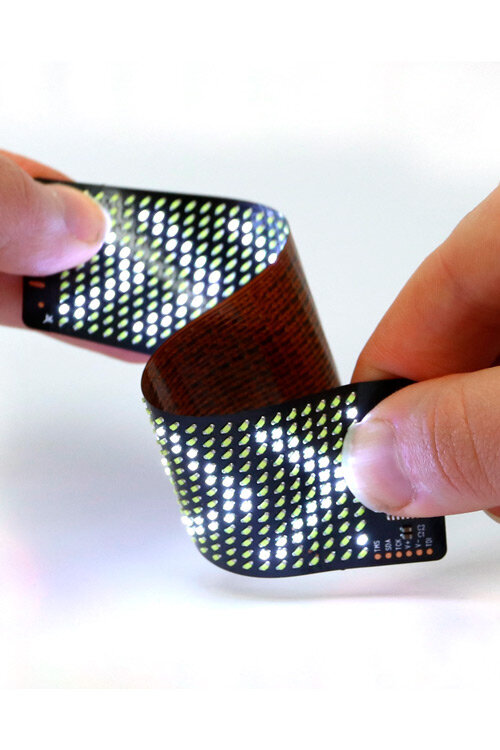
Some issues are straightforward to fix at home. Others are not. Here is how to tell the difference.
A single LED is out: This usually means one LED in the chain has failed. On individually addressable strips, a dead LED can also knock out every LED after it in the chain. If you are comfortable with a soldering iron, you can replace the individual LED. If not, this is a quick repair for us — send it in and we will turn it around fast.
A section flickers or cuts out intermittently: This is almost always a loose connection. Check the connector between the LED panel and the controller. Unplug it and reseat it firmly. If the connection is soldered rather than a plug, look for a cracked solder joint — it will appear dull or have a visible hairline crack.
The garment powers on but shows wrong colors or patterns: This is typically a data signal issue, not a power issue. Check that the data cable (usually a thinner wire, separate from the power leads) is firmly connected. If you are using Bluetooth control, make sure the app firmware matches the controller firmware.
Featured Product
LED Matrix Belt — Matrix pieces have dense LED grids. If individual pixels fail, the belt's modular design makes panel replacement straightforward. View Product →
When to Contact Support
Some things are beyond a home fix, and attempting them without the right tools risks making the problem worse.
Contact us if:
- Multiple sections of LEDs are dead or unresponsive after reseating connections.
- The controller does not power on at all, even with a known-good battery.
- You see burn marks, melted plastic, or smell anything unusual. Disconnect the battery immediately and do not attempt to power it on again.
- The garment was submerged in water or exposed to heavy rain while powered on.
- You are not comfortable soldering or working with small electronics.
We designed these garments, and we know every connection point. Repairs typically take 1–2 weeks, and we will give you an honest assessment of whether the repair makes economic sense versus the age and condition of the piece.
Featured Product
Face Changing LED Matrix Mask — Masks take more direct contact with skin and breath moisture than any other piece. Wipe the interior after each use and store with the battery disconnected. View Product →
The bottom line: LED clothing lasts when you treat it as what it is — a wearable electronic device built into a real garment. Remove jewelry before handling. Spot clean instead of washing. Store flat with the battery removed. Travel with batteries in carry-on. And if something goes wrong, reach out before you reach for the soldering iron.
These pieces are built to be worn, not displayed behind glass. But a little care goes a long way.