The Story Behind the LED Face Mask: From Prototype to NBA
The Mask That Changed Everything
In early 2020, I was building an LED face mask in my workshop. It was an experiment, a side project born out of the same curiosity that drives all my work: what else can an LED matrix do? I had no idea it would end up on the NBA's official Instagram, rack up millions of views, get covered by every major tech outlet, and then get knocked off by dozens of factories overseas. This is the full story of how it happened.
How It Started
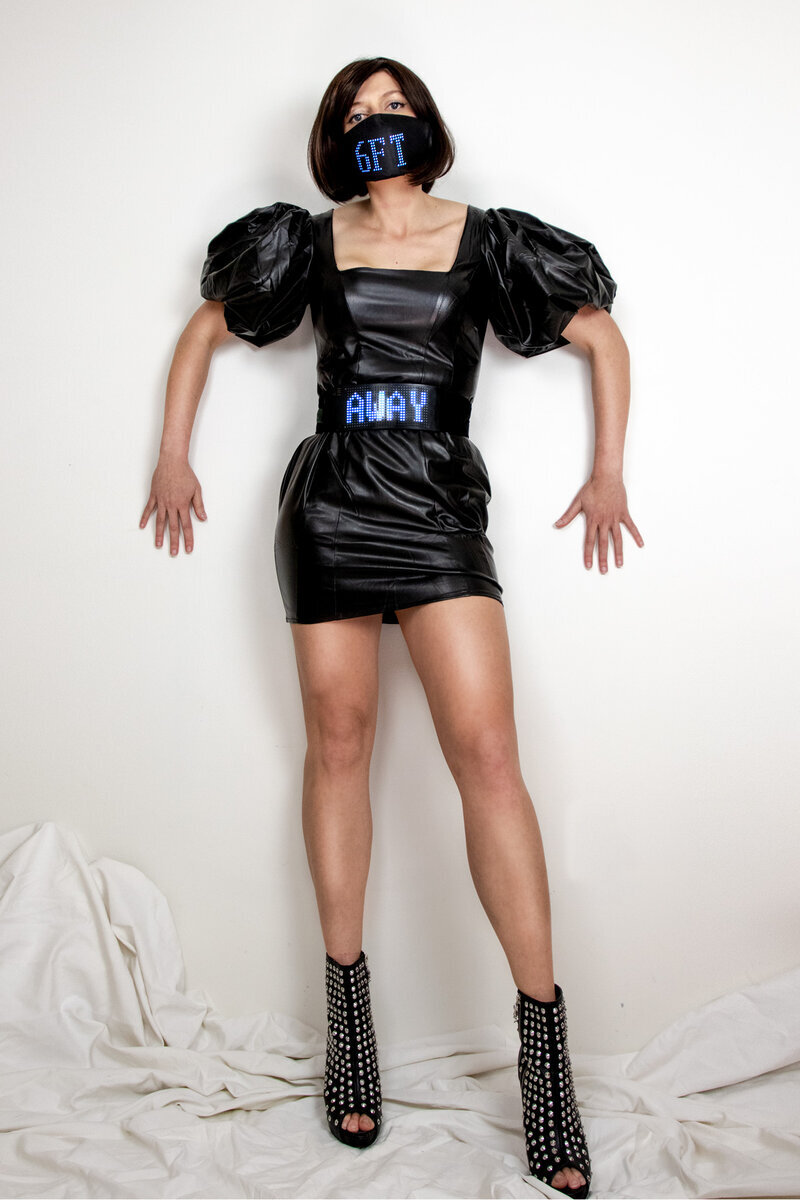
I had been working with LED matrices in the Lumen Couture line for a while. The Matrix LBD, the Matrix Belt, the choker — all of those use flexible LED panels that display programmable animations. The tech was proven. But I kept thinking about form factors beyond clothing. What could you put on your face?
The first prototype was rough. I took a flexible LED matrix panel, mounted it to a basic face mask frame, and wired it to a Bluetooth controller. The idea was simple: a mask that could display any animation, any text, any pattern, controlled from your phone. The execution was anything but simple.
The Technical Challenge
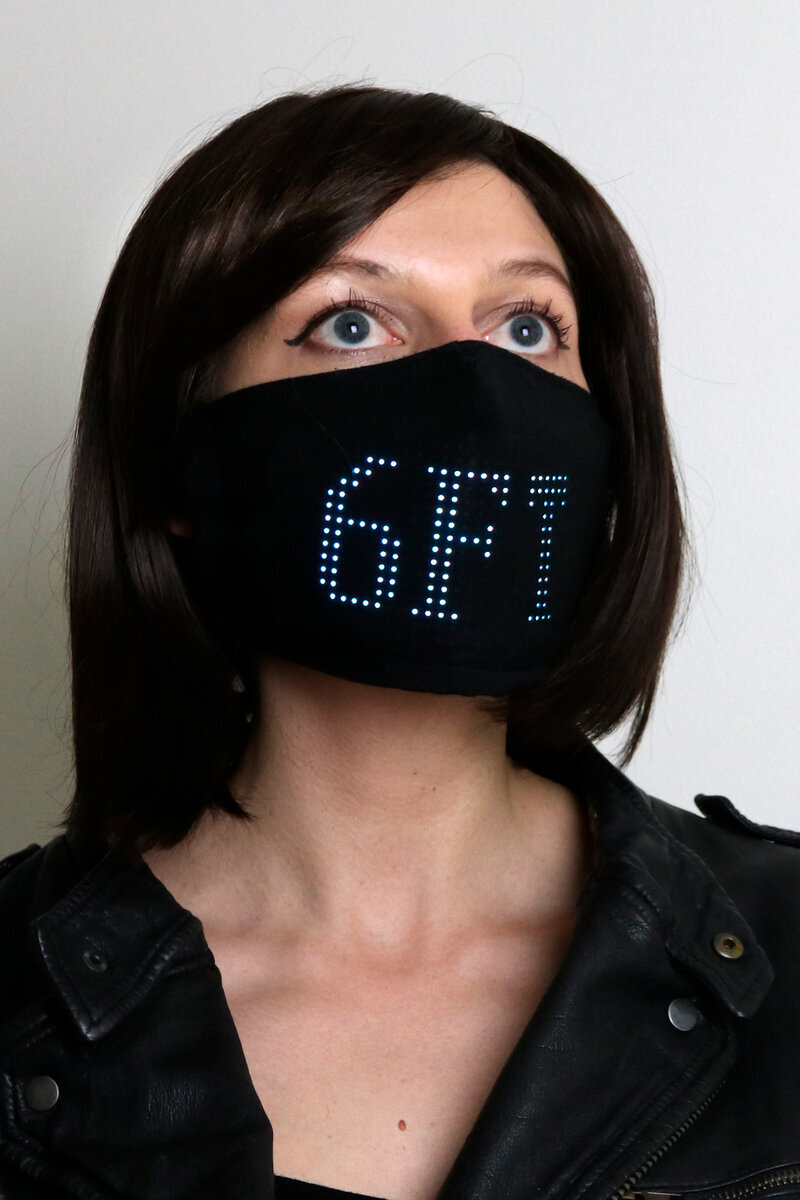
Putting an LED matrix on someone's face introduces problems you don't deal with on a dress or a belt. Heat is the first one. LEDs generate heat, and that heat is now millimeters from skin. I had to engineer the panel mounting to create an air gap and use lower brightness settings that kept surface temperature comfortable during extended wear.
Visibility was the second problem. The wearer needs to see out. I solved this by using the natural gaps in the LED pixel grid as sight lines, combined with semi-transparent backing material. It's not perfect vision, but it's workable in most environments.
Weight and comfort were the third challenge. An LED panel plus controller plus battery adds up. The final design distributes weight across the full mask surface and uses elastic mounting that conforms to different face shapes. I went through at least a dozen iterations of the strap and frame system before landing on something that people could wear for hours without discomfort.
Power was the fourth. The mask runs on a compact rechargeable battery that fits inside the mask housing. Battery life varies depending on animation brightness, but typical use gets several hours per charge.
The Breakout Moment
Then 2020 happened. The pandemic made face masks mandatory everywhere, overnight. Suddenly the LED face mask wasn't just a fashion experiment — it was relevant in a way I never anticipated.
The NBA Bubble in Orlando was where it broke through. The league was operating in a controlled environment, and players and staff were required to wear masks. Someone got hold of one of my LED masks. The NBA's official Instagram account featured it. The video went viral. Millions of views in days.

I watched the numbers climb from my workshop. The Lumen Couture website traffic spiked by orders of magnitude. My inbox filled with press requests, wholesale inquiries, and customers wanting to buy immediately. It was the most surreal week of my career.
The Press Tsunami
The NBA feature was the spark, but the press coverage that followed was the wildfire. VentureBeat ran a piece. The Verge covered it. Gadget Flow featured it in their product roundup. NPR called for an interview. King5 in Seattle did a local segment. CBC picked it up in Canada. The mask was everywhere, across every media vertical — tech, fashion, sports, lifestyle.

What struck me about the coverage was the consistency of the angle. Every outlet focused on the same thing: this wasn't a gimmick. It was a real product, designed and built by a real fashion-tech company, and it actually worked. The craftsmanship mattered. The fact that it was Bluetooth-programmable mattered. The story of how it was developed — by hand, in a workshop, by a woman in fashion tech — mattered.
The Knockoff Problem
Within months of the NBA feature, cheap copies started appearing on Amazon. They looked similar in product photos. They cost a fraction of the price. And most of them were terrible.
I've examined several knockoffs. The common problems: dim, low-resolution LED panels. Non-functional Bluetooth that barely pairs. Uncomfortable fit with rigid frames that dig into your face. Batteries that die after thirty minutes. No app support, or apps that crash constantly. The pixel density on the knockoffs is noticeably worse — you can count individual LEDs from across the room, whereas the Lumen Couture mask displays smooth, readable animations.
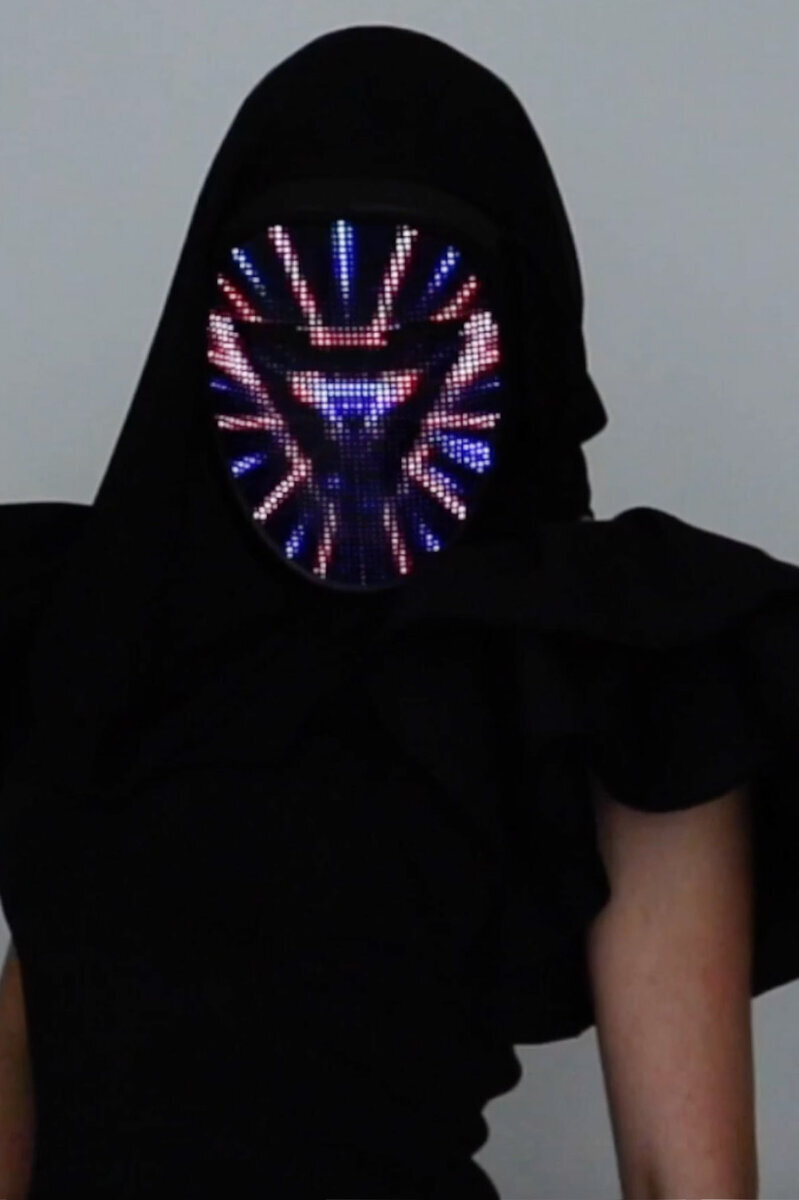
The original Lumen Couture mask uses a higher-density LED matrix, a reliable Bluetooth chip, a properly designed companion app, and materials I've tested for comfort and durability over hundreds of hours of wear. The knockoffs reverse-engineered the concept, not the engineering. There's a meaningful difference, and anyone who's held both side by side knows it immediately.
Two Versions
Based on the demand I saw, I developed two distinct mask products to serve different needs and budgets.
Featured Product
Face Changing LED Matrix Mask — $90. Full LED matrix display, Bluetooth connectivity, programmable via smartphone app. Display custom text, animations, equalizer patterns, and more. The original that started it all. View Product →
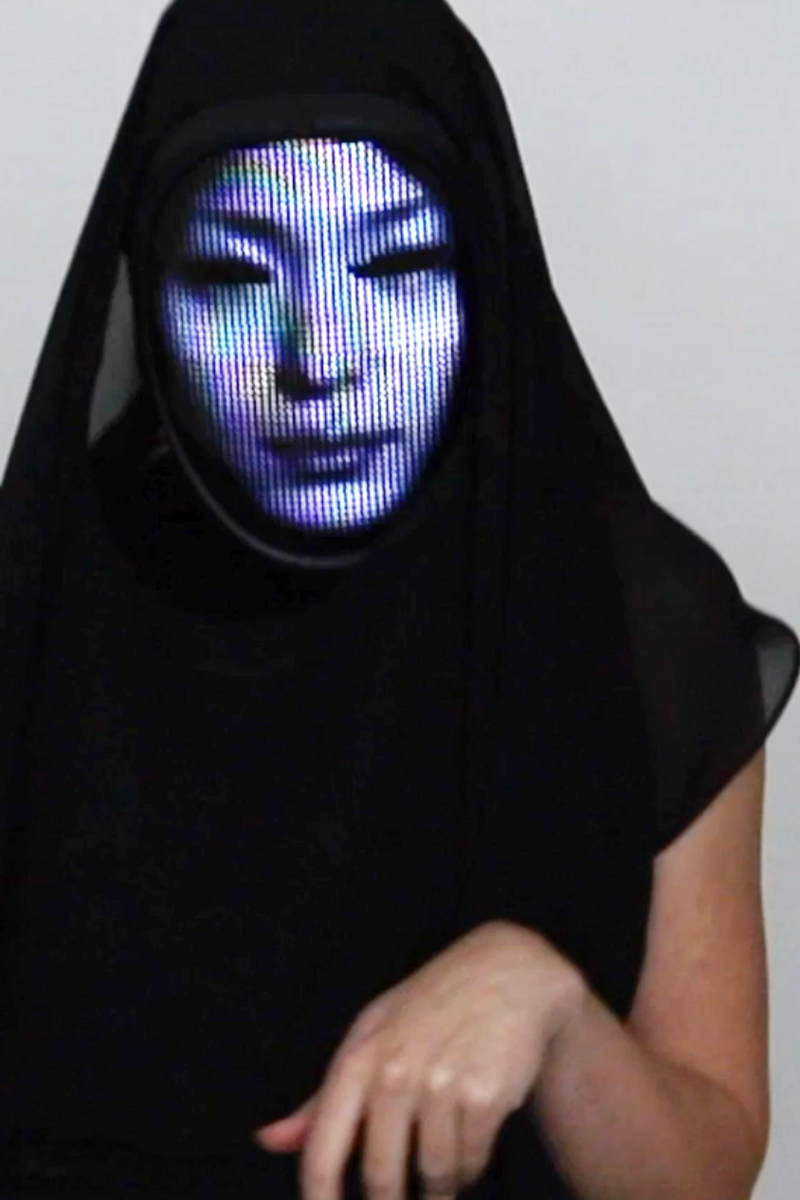
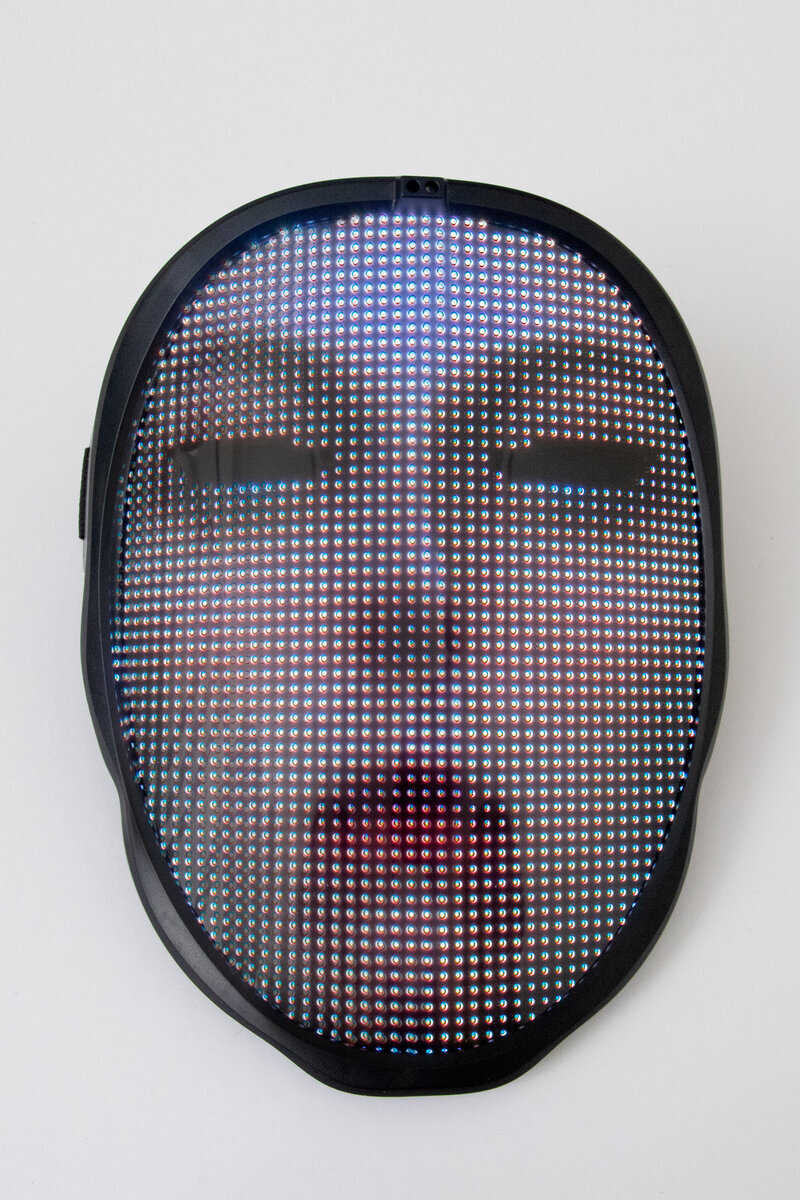
The Face Changing LED Matrix Mask at $90 is the full-featured version. It's the one that was on the NBA Instagram. Full LED matrix across the entire mask face, Bluetooth pairing to your phone, and a companion app where you can program any text, animation, or pattern. You can run an audio-reactive equalizer mode, display scrolling messages, or load preset animations. It's the mask for people who want full creative control.
Featured Product
LED Matrix Face Mask — $50. Preset LED patterns in a comfortable, ready-to-wear design. A more accessible entry point into LED fashion. View Product →
The LED Matrix Face Mask at $50 is the streamlined version. It runs preset patterns rather than full Bluetooth-programmable animations. It's lighter, simpler to operate — just turn it on and cycle through modes — and it's a solid entry point for someone who wants an LED mask without the full feature set. It's popular with younger buyers and people who want something eye-catching for events without needing to configure anything.
What the Mask Taught Me
The LED face mask was a turning point for Lumen Couture, and not just because of the sales spike or the press. It proved something I had suspected but couldn't confirm until the numbers were in front of me: there is a real, substantial market for LED fashion accessories at accessible price points.
The dresses and bodysuits in the Lumen Couture line are statement pieces. They range from $130 to $270. They're designed for performers, events, and people who are deeply invested in fashion-tech. The masks, at $50 and $90, opened the door to an entirely different customer. People who had never heard of LED fashion before were buying masks as gifts, as conversation pieces, as something fun to wear to a basketball game.
That insight directly influenced the rest of the product line. The LED Matrix Belt, the LED Matrix Choker, the LED Matrix Side Bag — all of those accessible-price-point accessories came out of the same realization the mask surfaced. If you build something that's genuinely well-made, genuinely functional, and genuinely affordable, people will buy it. You don't have to convince them that LED fashion is the future. You just have to put it in their hands and let the product speak.
The knockoff problem is ongoing, and I don't expect it to go away. But the original continues to outsell the copies in every metric that matters — reviews, repeat customers, and the kind of organic word-of-mouth that you can't buy. When someone puts on a Lumen Couture mask, they know the difference. That's the part you can't knock off.