5 Ways to Style an LED Accessory for Any Occasion
Full LED garments get the attention. A glowing dress walking down a runway stops the room. But the reality of how most people enter the world of illuminated fashion is much simpler: they start with an accessory.
A choker. A belt. A bag. One piece that adds light to an outfit they already own. This is by design. When I started Lumen Couture, I built full garments first because that was the technical challenge I wanted to solve. But over the years, I watched the same pattern repeat: a customer would browse the dresses, admire the bodysuits, then buy a belt. Not because the dresses were out of reach, but because the belt was the right first step. It fit into a wardrobe that already existed.
LED accessories are the most versatile pieces in our collection. They pair with clothes you already own, they travel easily, and they work across a range of settings that would surprise most people. Here are five occasions where an LED accessory fits naturally, and how to style each one.
1. Gallery Opening
Art openings are one of the best environments for LED accessories because the dress code is already fluid. People expect something visually interesting. The lighting is usually dim. And conversations tend to gravitate toward anything creative or unusual.
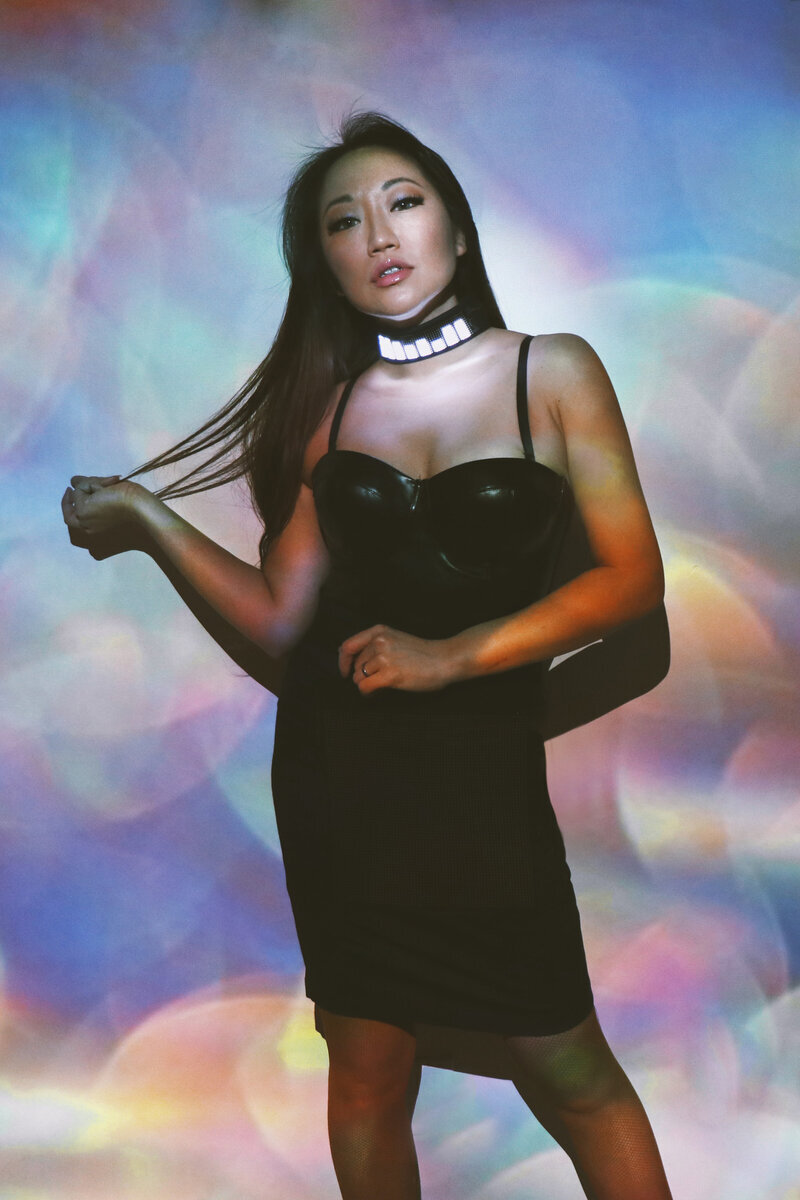
The Matrix Choker is my go-to recommendation here. At $65, it is the lowest barrier to entry in the collection, and it sits right at the neckline where it catches ambient light and draws attention without dominating the outfit. Pair it with an all-black ensemble: black turtleneck or high-neck top, dark trousers or a simple A-line skirt. The monochrome background lets the choker's scrolling LED display do the work. Keep jewelry minimal. One light source is enough.
The choker's display is programmable via Bluetooth, so you can set it to a slow animation or a static pattern. For a gallery, I recommend something subtle: a gentle pulse or a slow color shift. Save the rapid-fire equalizer patterns for louder environments.
Featured Product
LED Matrix Choker — Programmable LED necklace with Bluetooth app control. Scrolling text, animations, and custom patterns. $65. View Product →
2. Concert or Festival Night
This is the environment most people picture when they think of LED fashion, and for good reason. Dark venues, loud music, moving bodies. Light-up pieces thrive here. But the mistake I see is going too far. You do not need a full LED suit to stand out at a concert. A single well-placed accessory is more effective and far easier to wear for six hours.
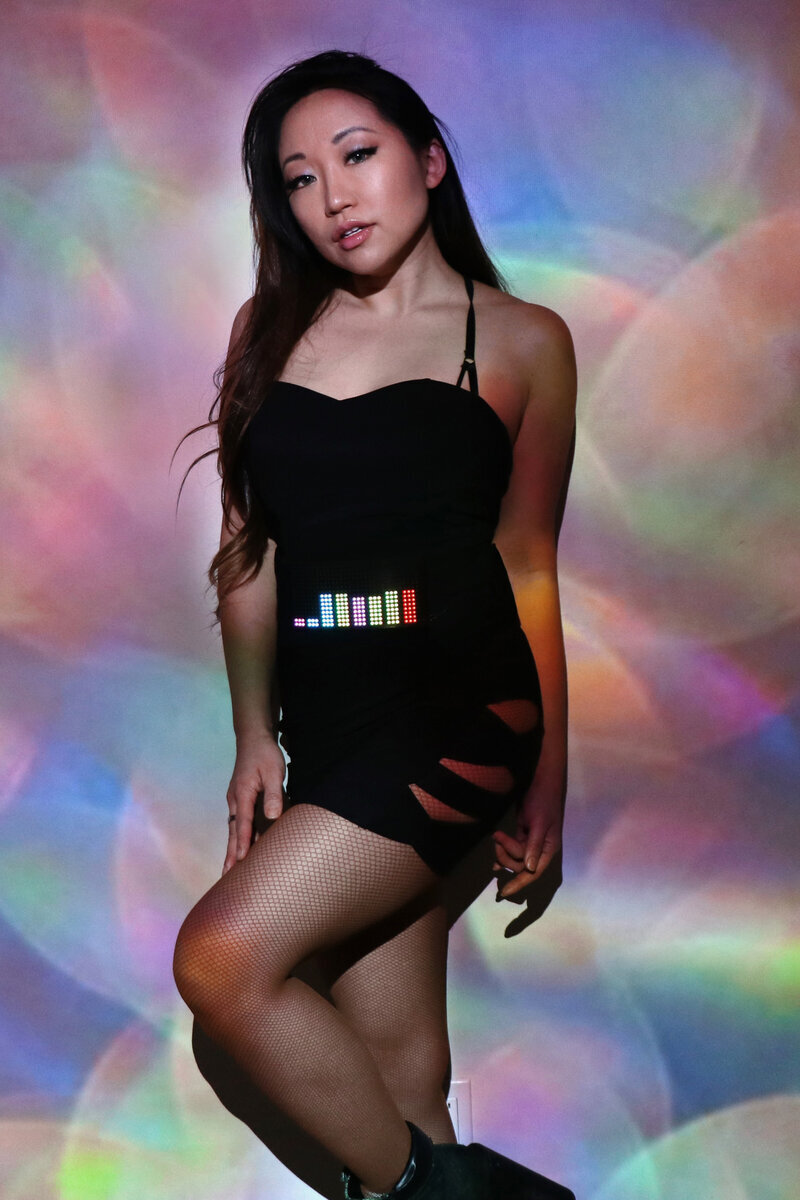
The Matrix Belt over a dark jumpsuit or high-waisted pants creates a focal point at the waist that reads well from a distance. It is visible in a crowd without being cumbersome. The belt sits flat, flexes with movement, and its display is bright enough to register even in strobe-heavy environments. I have worn this setup at events where I was on my feet for hours. A full garment would have been a liability. The belt was functional.
For festivals specifically, the belt also solves a practical problem: it makes you findable. Your friends can spot you. Photographers gravitate toward it. And when you want to turn it off, you press a button. It is one of the most-photographed pieces in the collection for a reason.
Featured Product
LED Matrix Belt — Flexible LED matrix panel with Bluetooth control. Fits over any high-waisted bottom. $85. View Product →
3. Date Night
This one requires more restraint. A date is not a performance. The goal is not to be the brightest object in the room. It is to carry something interesting, something that invites a question.

The Starmap Clutch is the piece I reach for in these situations. It is a handbag first. The construction is leather, the form factor is a standard clutch, and it sits on a table or tucks under your arm without looking out of place. But the face panel contains a flexible LED matrix that displays star maps, slow-moving patterns, or custom animations. It glows quietly. It does not shout.
At a restaurant, in dim lighting, it becomes a conversation piece without trying. I have watched people set it on the table and have their date ask about it within minutes. That interaction, the genuine curiosity it creates, is worth more than any amount of visual spectacle. This is the piece in the collection that proves LED fashion does not have to be loud to be effective.
Style it simply. A fitted dress or tailored separates in dark tones. Let the clutch be the single point of light in the outfit. Anything more competes with it.
Featured Product
Starmap Clutch — Leather clutch with integrated flexible LED display. Bluetooth-programmable patterns and star maps. $270. View Product →
4. Photoshoot or Content Creation
If you create visual content, whether that is photography, video, or social media, LED accessories are some of the highest-impact props available. A single light source built into a wearable changes what a camera can do.

The LED Side Bag is the piece I recommend most for on-camera work. At $90, it is affordable enough for content creators working on a budget, and the front-facing LED panel is large enough to read on camera, even in a wide shot. Sling it crossbody and the display sits at mid-torso, exactly where a viewer's eye naturally falls in a centered composition.
For video, the scrolling and animated patterns create movement in an otherwise static pose. For photography, a slow shutter speed turns the display into streaks and trails. I have seen photographers use this bag to create long-exposure portraits that look like they required a dedicated lighting rig. They did not. They required a bag and a tripod.
The practical advantage for content creators is that the accessory is self-lit. You do not need external LED panels or colored gels to get a glow effect on your subject. The light source is part of the outfit. This saves setup time and opens up locations that would otherwise require hauling gear.
Featured Product
LED Matrix Side Bag — Crossbody bag with front-facing programmable LED panel. Bluetooth app control. $90. View Product →
5. Wedding Reception or Gala
Formal events are where LED accessories face their hardest test. The dress codes are strict, the lighting is deliberate, and anything that reads as "costume" is wrong for the room. This is exactly why I think formal events are the most interesting challenge for this category.

An LED belt worn as an evening accent over a floor-length gown or structured cocktail dress bridges the gap between statement jewelry and wearable technology. The key is treating it as you would any other evening accessory: it needs to complement the outfit, not compete with it. A narrow belt with a slow, warm-toned animation reads as elegant, not electric. It catches candlelight in ways that a static accessory cannot.

I have worn LED accessories to galas and charity events. The reactions are consistently the same: curiosity first, then admiration. People in formal settings are used to seeing jewelry that sparkles. An accessory that actually produces light is an escalation of something they already understand, not a departure from it. That distinction matters. It is why a glow at the waist of a well-tailored dress does not feel out of place. It feels like the next step.
The Versatility Argument
The common thread across all five of these scenarios is that the accessory adapts to the context, not the other way around. You are not building an outfit around an LED piece. You are adding an LED piece to an outfit that already works.
This is the part that gets lost in conversations about wearable technology. People see a glowing dress on a runway and think the entire category is performance wear. It is not. A choker is a choker. A belt is a belt. A bag is a bag. The fact that they produce light makes them more interesting, not more difficult to wear. The electronics are hidden. The silhouettes are familiar. The controls are on your phone.
These are not costume pieces. They are statement accessories that happen to be programmable. Wear them the way you would wear any other piece of jewelry or leather goods: with intention, matched to the occasion, and with confidence that one well-chosen detail is enough to define an outfit.
Start with one. See how it fits into what you already wear. That is how most of our customers find their way in. The rest follows.